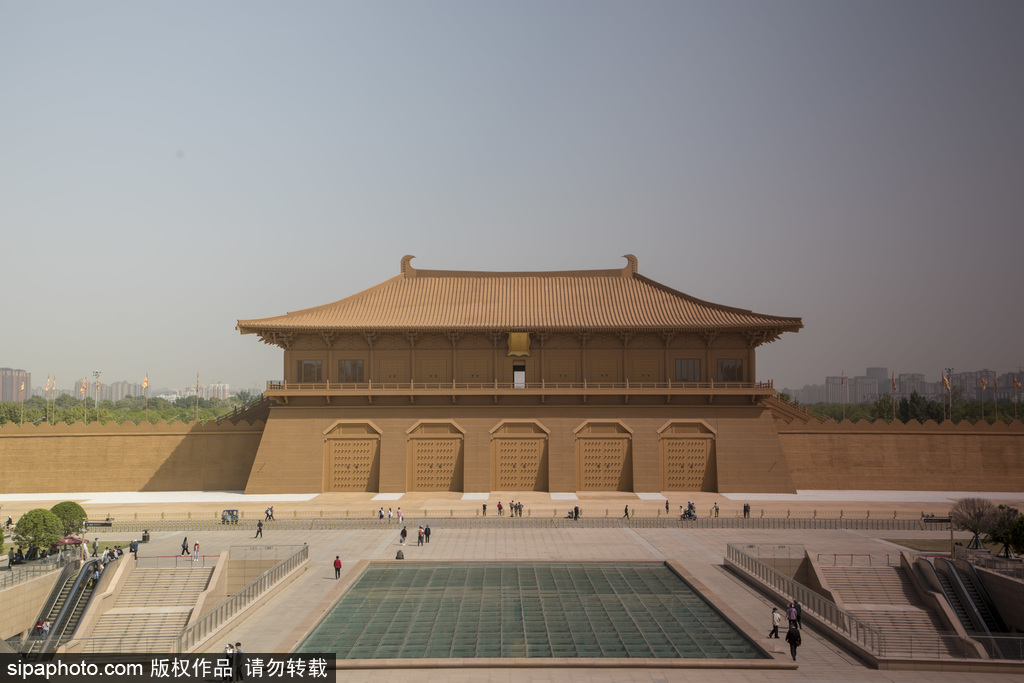
Daming Palace
Overview
The Daming Palace, known as the "Palace of Great Brightness", was a significant imperial palace of the Tang Dynasty (618-907) in China. Located in Chang'an, the capital city of the Tang Dynasty, the palace was constructed in 634 for Li Yuan, the founder of the Tang Dynasty. It served as the imperial power center for over 200 years. The Daming Palace is part of the Daming Palace National Heritage Park, which preserves the archaeological remains of this historic site. The park is situated at 585 Ziqiang East Road in the Xincheng district of Xi'an city, Shaanxi province.
Historical Significance
The Daming Palace was the most glorious and grand architectural complex among the three major palaces in Chang'an. It covered an area of over three square kilometers, equivalent to the size of Central Park in New York City. The palace featured 11 gates and more than 40 proven sites of palatial structures, most of which were centered around Taiye Lake – the heart of the inner court in the northern section of the palace. The southern areas, known as the outer court, included the halls of Hanyuan, Xuanzheng and Zichen. The main road within the palace, Danfengmen Avenue, was remarkably wide, measuring 176 meters across.
Architectural Features
The architectural design of Daming Palace was a testament to the grandeur and sophistication of Tang Dynasty architecture. Its enormous scale and magnificent buildings showcased the majestic style of palatial architecture during the Tang Empire. The palace complex was composed of various halls, pavilions and gardens, exemplifying the artistic and cultural achievements of the period. Despite the passage of time, the archaeological park has successfully preserved the original landforms of the palace, allowing visitors to appreciate the historical charm and architectural layout of the original site.
Cultural and Archaeological Importance
Daming Palace is an important cultural and archaeological site, reflecting the rich history and cultural heritage of the Tang Dynasty. It is one of the six UNESCO World Cultural Heritage sites located in Xi'an, a city renowned for its historical significance in China. The site embodies the architectural and cultural achievements of the Tang Dynasty, offering valuable insights into the political, economic and cultural dynamics of the era. The Daming Palace National Heritage Park not only serves as a historical monument but also as an expansion of public space in Xi'an, providing a cultural and recreational area for visitors.
Preservation and Public Engagement
The Daming Palace National Heritage Park is dedicated to the preservation and promotion of this historical site. It offers a comprehensive experience for visitors through its well-preserved archaeological remains and educational programs. The park plays a vital role in enhancing public awareness and appreciation of China's rich cultural heritage. It provides opportunities for cultural and educational activities, fostering a deeper understanding of the Tang Dynasty and its historical significance.
Modern Interpretations and Artistic Representations
In recent years, efforts have been made to recreate and represent the grandeur of the Daming Palace through various artistic endeavors. For instance, folk artists are creating miniature replicas of ancient buildings, including those of the Tang Dynasty, using modern technology to enhance their accuracy. These replicas aim to bring the historical significance of the Daming Palace to a wider audience, bridging the gap between past and present. Additionally, the Daming Palace has been featured in documentaries and artistic productions, highlighting its historical and cultural importance in various media formats. Article reference1. Daming Palace National Heritage Park. chinaservicesinfo.com. 2021Photo Gallery(2 pictures)CategoriesCultural HeritageTagHistorical BuildingCultural LandscapeTangible Cultural HeritageRelatedDaming Palace National Heritage ParkCatalogue1. Overview2. Historical Significance3. Architectural Features4. Cultural and Archaeological Importance5. Preservation and Public Engagement6. Modern Interpretations and Artistic Representations- - - []








